
From the Lab
Articles
Technical insights on dilution calculations, serial dilution strategies, and laboratory solution preparation.
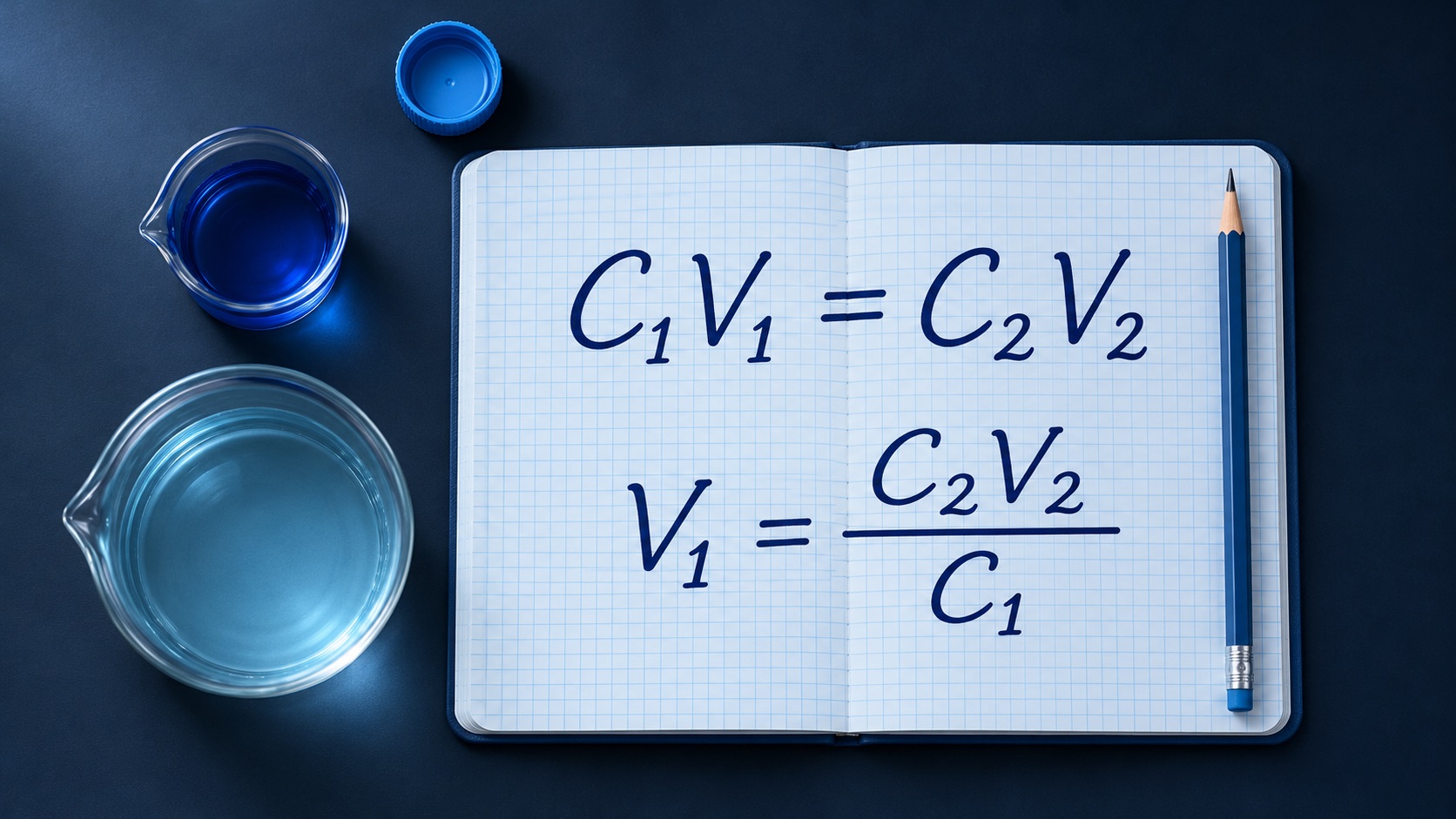
C₁V₁ = C₂V₂ Explained, with 5 Worked Examples
Learn how to use C1V1 = C2V2 with five worked dilution examples, unit conversions, final-volume checks, and clear limits on when the equation applies.

5 Common Dilution Mistakes New Lab Students Make (and How to Avoid Them)
Avoid five common dilution and solution-prep mistakes with worked examples, practical pipetting tips, and a checklist for your next day at the bench.
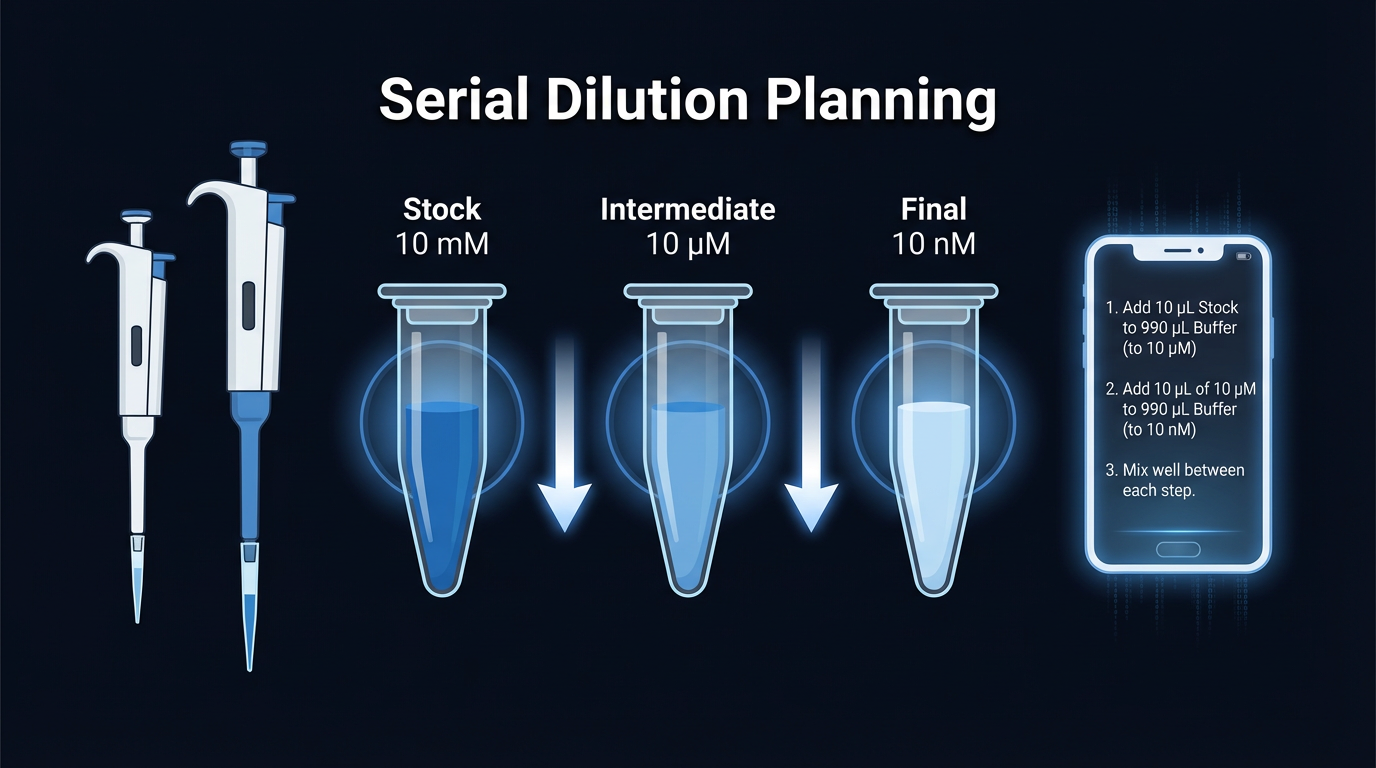
How to Plan a Serial Dilution Without Making Errors
Serial dilution is where most lab calculation tools break down. Learn what serial dilution is, how to pick intermediate concentrations, avoid common pipetting errors, and why accuracy matters for calibration curves and downstream assays.
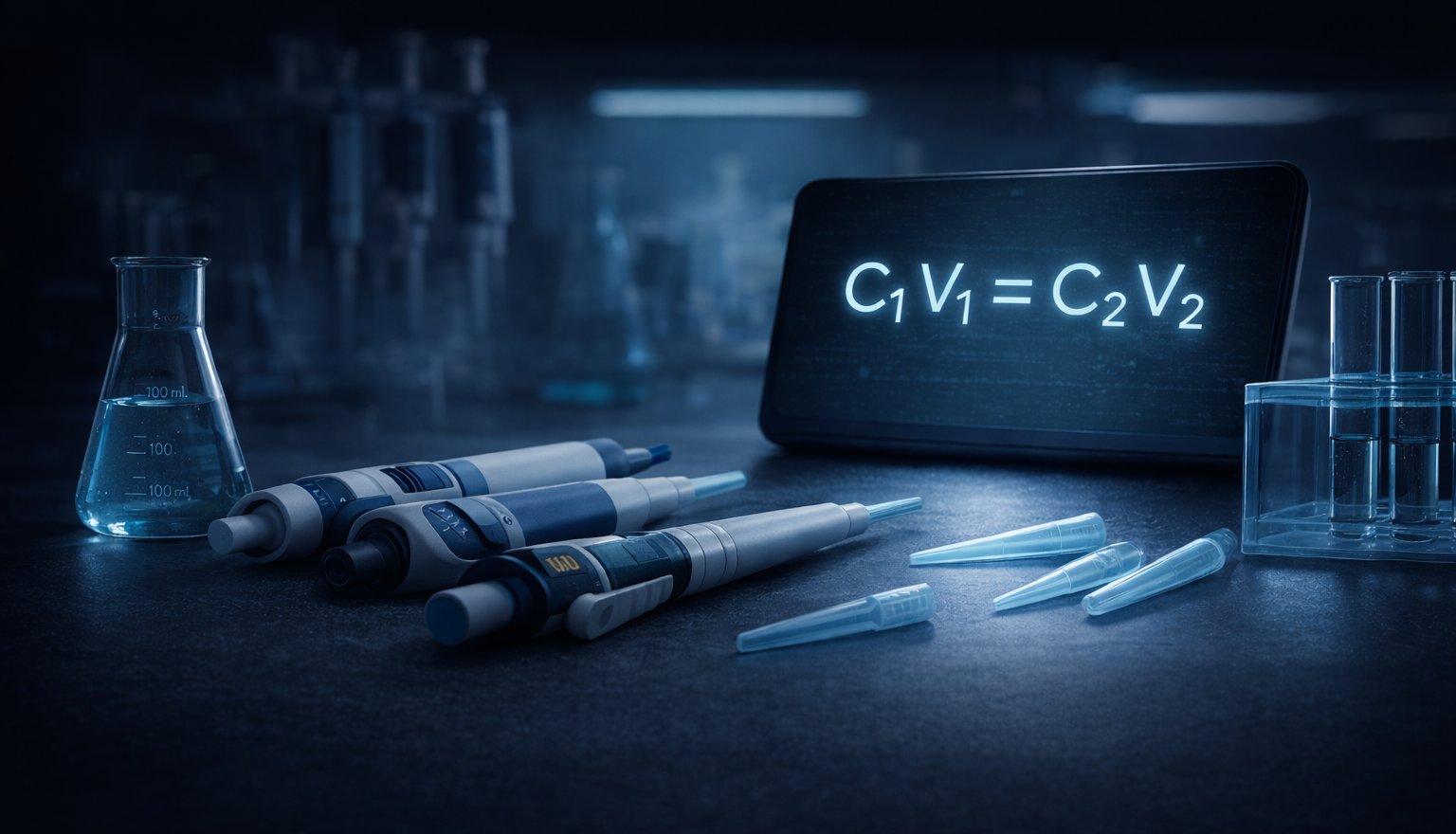
Why Most Dilution Calculators Break Down in Real Labs
C₁V₁ = C₂V₂ is simple. Getting it right at the bench often isn't. Most calculators stop at the formula — here's why pipette accuracy, resolution, and serial dilution planning matter more than algebra.